

Little Miss Eclectic
A defence of appropriation, perhaps. From my forthcoming zine, HOTPOT.

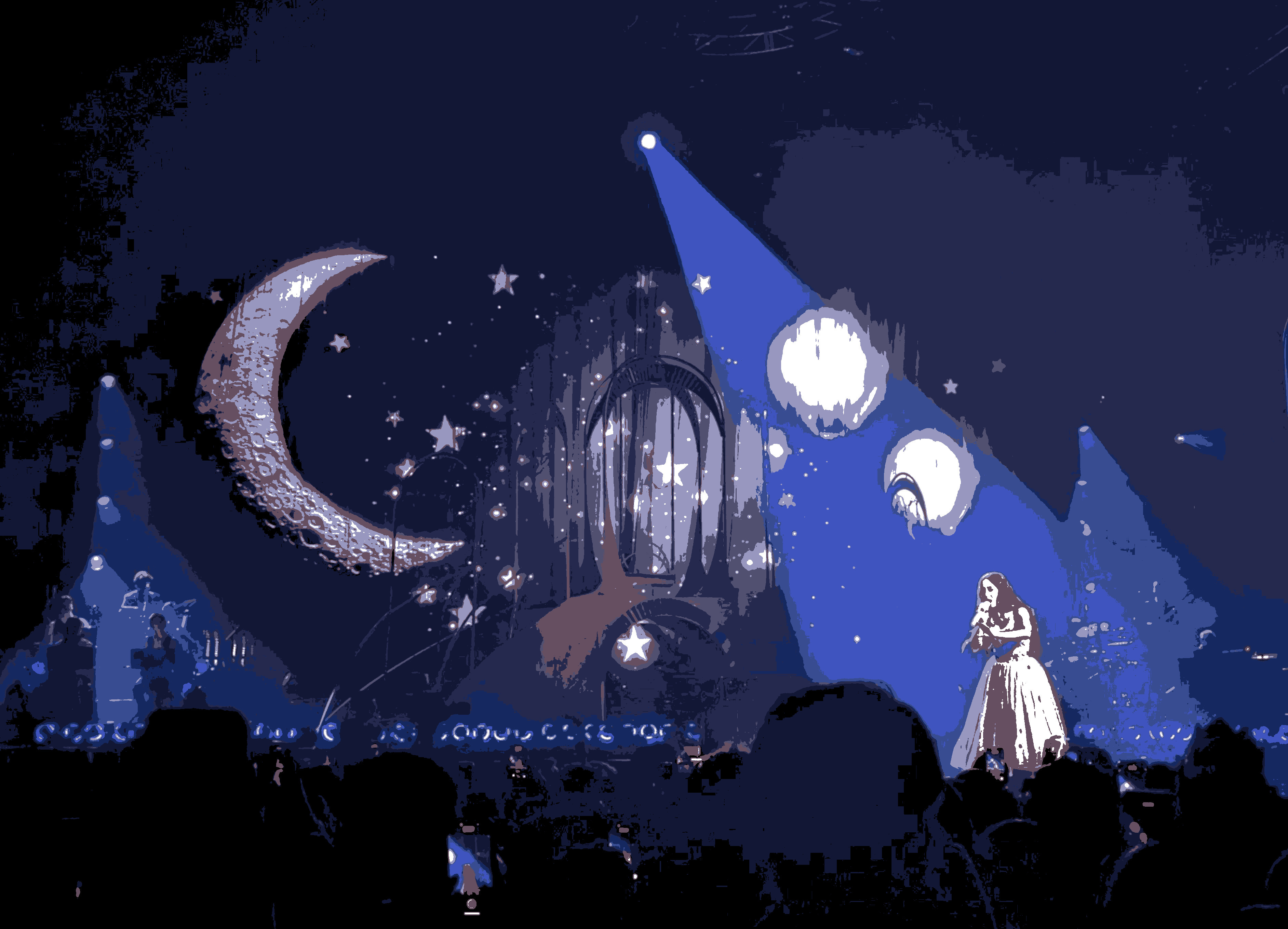
Wasians are popping off right now. I know this to be true, because I overheard it a few weeks ago while queueing outside an udon restaurant1: ‘Wasians are really popping off right now’.
The most popping-off Wasian of all is probably Laufey. A singer-songwriter of Chinese and Icelandic descent, who flounces around in frilly dresses and bows, Laufey has built a career making ‘traditional’ pop music. She takes notes from vintage movie musicals, bossa nova, and indeed, vocal jazz.
This liberal use of jazz motifs has opened her up to criticism. Some of this is reasonable, and to do with the dire state of music writing. When writers unfamiliar with jazz discuss Laufey, they tend to overstate her stature within the modern genre.
Others criticise her non-engagement with the extant jazz community. By drawing mainly on a fossilised mid-century canon, they argue, she reinforces a mainstream impression that jazz is dead (or at least moribund). Moreover, by choosing mainstream or low-culture influences — ‘cocktail bar music’ — she’s said to be hastening along the genre’s dilution.
These critics have, in my opinion, grossly misunderstood Laufey’s aesthetic project. It is not specifically a jazz one, but rather one of general past-ness. Aesthetics of past-ness are necessarily appropriative and asymmetrical.
In today’s world, everything is targeted and curated. To some extent, this is the result of marketing. Behind every new cultural product is an office full of people, surveying and addressing our baser cravings. Worse still, these cultural products are disseminated by personalised algorithms — Netflix, Twitter, TikTok. To engage with anything current is to submit to being watched.
It’s no surprise that young audiences should fetishise the culture of yesteryear. The driving force of nostalgia is not pain or homesickness, as its etymology would have us believe, but rather irony. When we engage with archival media, we feel safer knowing that past filmmakers, musicians, and writers couldn’t possibly have anticipated our doing so. As a society, we’ve yet to invent a more thrilling pastime than eavesdropping.
This same impulse can manifest as a sort of benign Orientalism. Western K-pop fans spend an inordinate amount of time imagining how Korean audiences might process things — they bristle at ‘Westernised’ projects which address them too directly. The Japanese city pop fad is a little of column A and a little of column B, turning the cultural detritus of 昭和 Shōwa era Tokyo into a pleasant digital diorama2.
Of course, there’s nothing actually ‘safe’ about Laufey’s music. Her output is targeted, marketed and disseminated much in the same way as Taylor Swift’s or Ariana Grande’s. Still, her magpie aesthetic is charmingly of-her-generation. While it may not be authentically traditional, it’s non-traditionally authentic.
This mode of engagement is also a distinctly Wasian one. To be mixed race is to hold culture at a distance, or to view oneself as an incidental listener. Were Laufey’s project directed orientally rather than occidentally, I doubt we’d be having this conversation at all.
The Insta-famous one on St Mark’s Place.
In the case of Ginger Root’s Shinbangumi, an actual diorama. Incidentally, my Korean mum hates city pop, as do many East Asian people of a certain age. It doesn’t matter, though, I’ll keep listening to it.